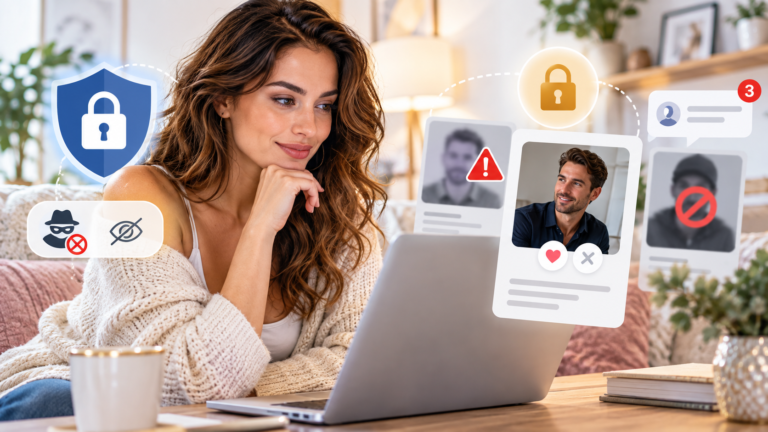
Adult dating sites can make it easier to meet people with similar interests, but they also require some basic precautions.
The same privacy and scam risks found on mainstream dating apps can appear on adult dating platforms, and the sensitive nature of these services makes protecting personal information especially important.
Adult dating safety does not mean assuming everyone you meet is dishonest. It means knowing what information to protect, recognizing common warning signs and taking your time before trusting someone you have only met online.
Start With Your Privacy
Before creating an adult dating profile, think about how much personal information you actually need to share.
A dating profile usually does not need your home address, workplace, financial information or other details that could easily identify where you live or work.
Consider using:
- a unique username
- a separate email address
- a strong password that you do not reuse elsewhere
- privacy settings provided by the platform
Be especially careful with photographs that reveal your home, workplace, vehicle licence plate or other identifying details in the background.
Even platforms that emphasize discretion cannot guarantee that something shared online will always remain private.
Take Your Time With New Connections
One of the simplest safety measures is also one of the most useful: do not rush.
The FBI recommends taking it slow and asking questions when meeting someone online. It also warns that scammers sometimes try to build an intense relationship quickly to gain trust.
Someone showing interest quickly is not automatically suspicious.
What matters is the overall pattern.
Be more cautious if someone becomes emotionally intense very quickly, avoids reasonable questions, or repeatedly gives reasons they cannot meet or verify basic details about themselves.
Be Cautious When Someone Wants to Leave the Platform Immediately
Moving from a dating site’s messaging system to texting, WhatsApp, or another private service is normal once two people become comfortable.
But doing it immediately can also remove some of the protections and reporting tools the dating platform offers.
The FTC notes that romance scammers often try to move conversations off dating services before eventually asking for money.
There is nothing wrong with communicating elsewhere later.
Just do not feel pressured to move faster than you are comfortable with.
Watch for Requests for Money
This is one of the clearest warning signs.
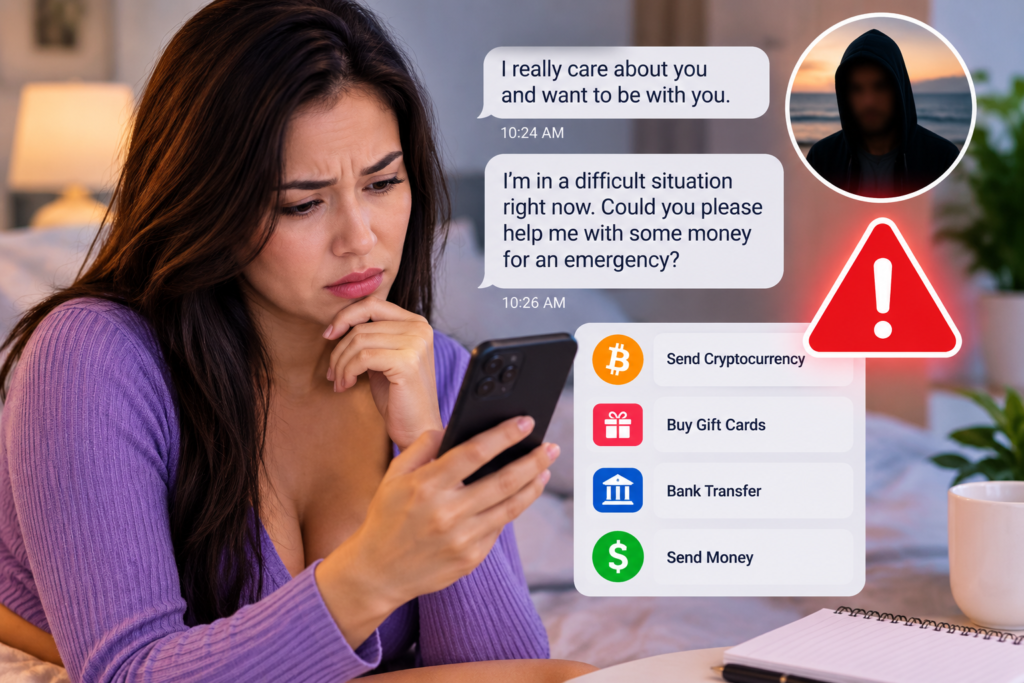
Romance scammers may spend considerable time building trust before asking for financial help. Common stories involve medical emergencies, travel expenses, legal problems or other unexpected crises.
Some scammers also introduce supposed cryptocurrency or investment opportunities.
The FTC’s advice is straightforward: do not send money or gifts to an online romantic interest you have never met in person.
Be particularly suspicious of requests involving:
- cryptocurrency
- gift cards
- wire transfers
- money-transfer apps
- bank account information
- financial assistance for an emergency
These payment methods are often difficult to reverse once money has been sent.
Fake Profiles Can Be Difficult to Spot
A polished profile does not prove that the person behind it is genuine.
Scammers can copy photographs, names and personal details from real people. New AI tools can also make fabricated photos, messages and identities more convincing than they once were; the FTC specifically warned in 2026 that AI and other technology can make romance scams harder to recognize.
That makes consistency more important than appearance.
Pay attention to whether the person’s story stays consistent over time.
If something seems unusual, the FBI and FTC both recommend researching the person’s profile photograph using online or reverse-image searches to see whether it appears under another identity.
Common Warning Signs
No single sign automatically means someone is a scammer, but several together deserve attention.
Be cautious if someone:
- claims strong feelings unusually quickly
- repeatedly avoids meeting in person
- gives inconsistent personal details
- asks you to keep the relationship secret
- asks for money or financial information
- offers investment opportunities
- pressures you to send private or intimate images
- repeatedly has emergencies requiring financial assistance
The FBI also warns that requests for intimate images or sensitive information can sometimes be used later for extortion.
Protect Intimate Photos and Videos
Adult dating can involve more private conversations than ordinary dating.
That makes it particularly important to think before sending intimate images or videos.
Once a file leaves your device, you cannot completely control where it goes next.
If privacy matters to you, avoid including identifiable details such as your face, workplace, home address, or other information.
And never allow someone to pressure you into sharing something you do not want to share.
Use the Platform’s Safety Tools
Reputable dating services generally provide tools to block and report suspicious users.
Use them.
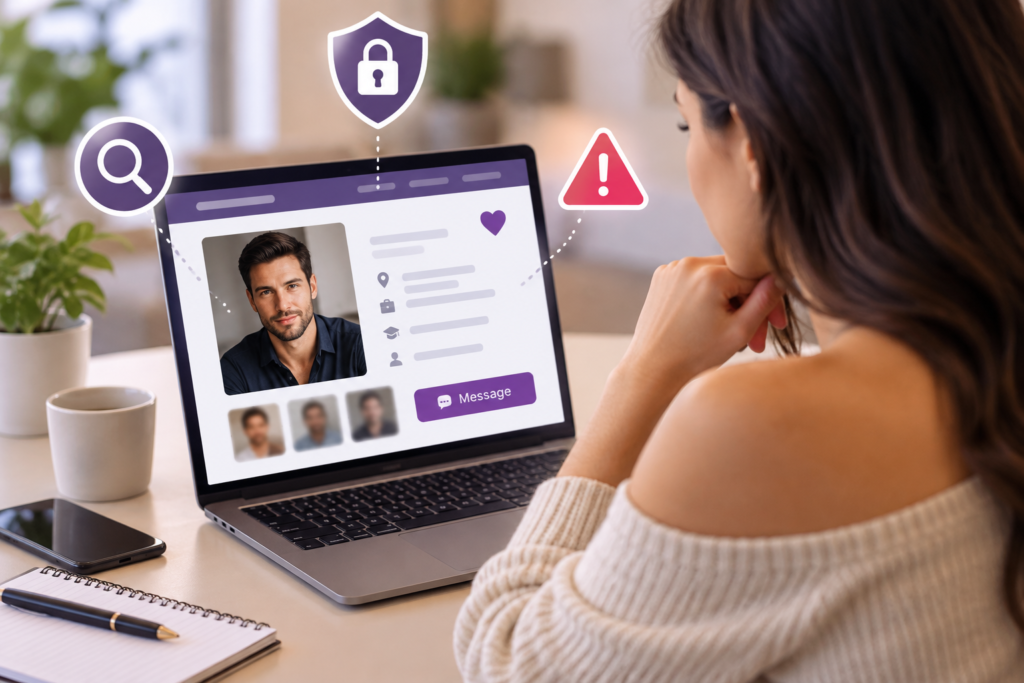
If someone threatens you, attempts to scam you, sends abusive messages or appears to be impersonating someone else, report the account to the platform rather than simply ignoring it.
The FTC also recommends notifying the dating service or social network where you encountered a suspected romance scam.
What If You Think You’re Being Scammed?
Stop sending money or personal information.
You don’t need to confront the person or prove they are lying.
Instead:
- Stop communication.
- Save relevant messages or transaction records.
- Report the account to the dating platform.
- Contact your bank or payment provider immediately if you sent money.
- Report suspected fraud to the appropriate authorities in your country.
The FTC advises contacting the company or financial institution used to send the payment as soon as possible and asking whether the transaction can be reversed.
Adult Dating Safety and Privacy
Privacy and safety are related, but not the same.
A platform can provide privacy controls while another user can still behave dishonestly.
Likewise, a genuine person can accidentally reveal more personal information than they intended.
Good adult dating safety involves both:
choosing platforms carefully and managing your own information carefully.
If discretion is especially important to you, review the platform’s privacy settings and policies before creating an account.
Ashley Madison Review 2026: How It Works, Costs, Privacy & More.
Adult Dating vs Live Cam Sites
Dating platforms and live cam sites involve different types of interaction.
On an adult dating platform, you are generally communicating with other members in the hope of making a connection.
On a live cam site, you are typically interacting with performers providing online entertainment.
Understanding that difference can help you set realistic expectations and recognize unusual behaviour.
The Bottom Line
Adult dating sites can provide a convenient way for adults to meet and communicate, but privacy and common sense still matter.
Take your time.
Protect information you don’t need to share.
Be especially cautious when someone asks for money, financial information, or investments.
Remember that genuine connections don’t require you to ignore warning signs or take financial risks.
The goal is not to distrust everyone you meet online.
It is to make sure you remain in control of your information, money and decisions.